Every brush has a unique personality. Once you understand how it responds to water, pressure, and movement, you'll be able to paint with greater confidence and far fewer unnecessary strokes.
Expressive Brushwork in Watercolor - Workshop Replay
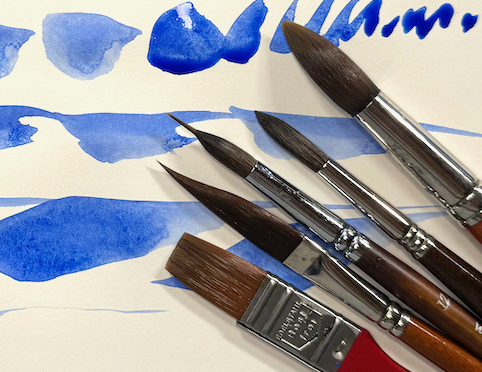
Every Brush Has a Unique Personality
Do your brushstrokes sometimes feel stiff, hesitant, or overworked?
Perhaps you rely on the tip of the brush, struggle to create natural-looking marks, or feel uncertain about which brush to use.
Every brush responds differently to water, pressure, and movement. Once you understand how your brush behaves, you'll paint with greater confidence and far fewer unnecessary strokes.
In this focused watercolor workshop, you'll discover how brush choice, pressure, moisture, direction, and edge control work together to transform the way you paint.
Through manageable exercises and small painting studies, you'll learn to use the tip, belly, and side of the brush to create expressive leaves, grasses, branches, rocks, water, flowers, shadows, and textures.
The goal is not simply to loosen up.
It's to understand your brush well enough to paint with greater freedom without losing control.
During this workshop, you’ll learn to:
Understand the differences between synthetic, natural, and blended brushes
Choose a brush based on its behavior rather than the number on the handle
Use the tip, belly, and side of the brush
Vary pressure to create fine, broad, tapered, and expressive marks
Control the amount of water and pigment in the brush
Create hard, soft, and lost edges
Soften an edge without flooding the paper
Suggest natural forms with fewer, more intentional marks
Recognize when a painting needs another stroke—and when it is time to stop
Understanding Your Brushes
Not all watercolor brushes behave the same way.
We’ll compare synthetic, natural-hair, and blended brushes and explore how each responds to water, pigment, pressure, and movement.
You’ll learn why some brushes offer more spring and control, while others hold more water and create softer, more fluid marks.
There is no single brush that is perfect for every situation. The goal is to understand what each brush can do and choose the one that supports the mark you want to make.
Pressure Changes Everything
Many students think they need a different brush for every stroke. Often, they simply need to change the amount of pressure.
We’ll explore how light, medium, and full pressure affect the width, shape, texture, and character of a mark.
You’ll practice movements such as:
- Touch, press, pull, and lift
- Fine to broad
- Broad to fine
- Press and release
- Twisting the brush
- Using the side of the brush
- Broken dry-brush marks
- Changing direction within a stroke
Hard, Soft, and Lost Edges
Expressive brushwork is not only about the stroke itself. It is also about the edge the stroke leaves behind.
You’ll learn how to use:
Hard edges for clarity, focus, structure, and contrast.
Soft edges for atmosphere, distance, movement, and gently curving form.
Lost edges to connect shapes, avoid outlines, and create a more natural painting.
You’ll also practice softening an edge with the correct amount of moisture—without flooding the paper.
How the Workshop Is Structured
Part One: Meet Your Brushes
Compare brush shapes, sizes, materials, spring, water capacity, and pigment release.
Part Two: Pressure and Movement
Practice using the tip, belly, and side of the brush to create varied, expressive marks.
Part Three: Moisture and Edge Control
Explore hard, soft, and lost edges and learn to soften an edge without flooding the paper.
Part Four: A Vocabulary of Natural Marks
Apply the exercises to leaves, petals, branches, grasses, foliage, rocks, water, reflections, shadows, and textures.
Part Five: Bring It All Together
Complete a small expressive painting study using varied pressure, edge control, atmosphere, and intentional marks.
This Workshop Is Perfect For You If
Your paintings often feel stiff or overly controlled
You tend to paint everything with the tip of the brush
You are unsure which brush to use
You struggle to create natural-looking foliage, grasses, or branches
You frequently overwork your paintings
You want to loosen your brushwork without losing structure
You want greater confidence before beginning a larger painting
This workshop is suitable for beginning and intermediate watercolor artists, as well as experienced painters who want to refresh their brushwork and move beyond hesitant or repetitive marks.
The Watercolor Confidence Collection
Expressive Brushwork is part of the Watercolor Confidence Collection—a series of focused workshops designed to help you understand watercolor, strengthen essential skills, and approach your paintings with greater confidence.
This workshop pairs beautifully with:
- Trees & Light
- Calm Landscapes
- Creating Form: Flowers
- Clouds & Atmosphere
- Transparent Sea Glass
Each workshop focuses on a different skill while building upon the same foundation: learning to see, simplify, and make intentional choices.
What Makes This Workshop Different
This is not simply a collection of decorative brushstroke exercises.
You’ll learn how brush choice, pressure, moisture, and edge control work together—and how to connect every mark to a purpose.
Rather than copying a painting stroke by stroke, you’ll develop skills you can apply to flowers, landscapes, trees, water, rocks, and nearly every subject you paint.
Included
✔ Live 2 hr online watercolor workshop replay
✔ Lifetime replay access
✔ Downloadable workshop guide
✔ Brush comparison exercises
✔ Pressure and stroke practice pages
✔ Hard, soft, and lost-edge exercises
✔ Small painting studies
✔ Reference images
✔ Access to the completed workshop lessons after the live event
Materials
You do not need a large collection of brushes.
A small selection is enough.
Recommended brushes may include:
- One medium or large round brush
- One smaller round brush
- One soft mop, natural-hair, or blended brush
- One synthetic brush
- Optional flat, dagger, or rigger brush
Use the brushes you already have whenever possible. During the workshop, we’ll explore their individual qualities and discover what each one does best.
You’ll also need:
- Watercolor paper
- A basic selection of watercolor paints
- Water containers
- A mixing palette
- Paper towels or a soft cloth
- A pencil and eraser
- Scraps or the backs of older paintings for practice
Every Painting Begins with One Brushstroke
Every watercolor painting—whether it's a flower, landscape, cloud, or piece of sea glass—begins with a single brushstroke.
When you understand how your brush responds to pressure, moisture, movement, and pigment, you'll begin every painting with greater confidence.
Join me for Expressive Brushwork in Watercolor and discover how a few intentional marks can change the way you paint forever.
You'll Never Look at Your Brushes the Same Way Again
By the end of this workshop, you'll understand:
✓ why one brush feels effortless while another feels frustrating
✓ why one stroke creates beautiful foliage while another looks stiff
✓ why soft edges sometimes bloom and sometimes stay smooth
✓ why changing pressure can completely transform a mark
Skill Level
Beginner to Intermediate
Meet Your Instructor
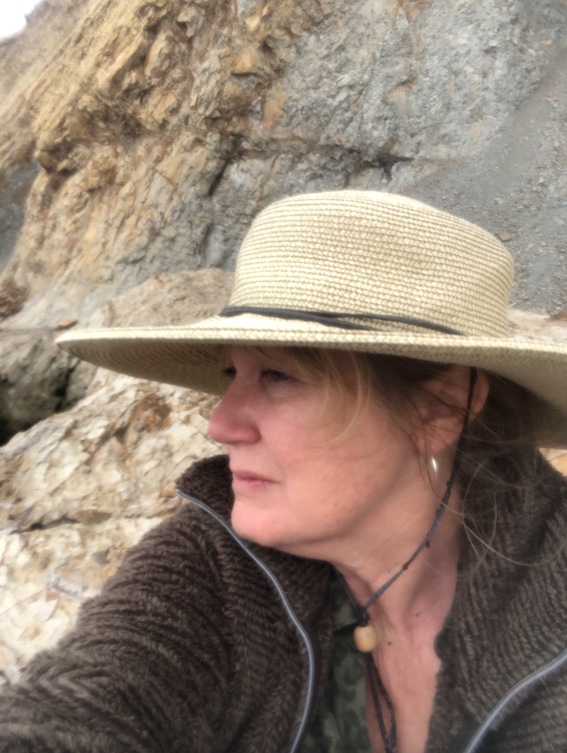
Birgit O'Connor is an internationally recognized watercolor artist and instructor known for making watercolor approachable, enjoyable, and inspiring.
For more than 30 years, she has taught thousands of artists how to simplify their subjects, understand light, and paint with greater confidence. Her students appreciate her clear demonstrations, encouraging teaching style, and ability to make even complex techniques easy to understand.
Birgit has taught workshops throughout the United States and Canada, served as faculty for Watercolor Live, and has been a juror for the Transparent Watercolor Society of America. Through her online workshops, books, and videos, she continues to help artists around the world discover a more expressive approach to watercolor.
Her philosophy is simple:
"Don't paint every detail. Learn to see the light, simplify the shapes, and let your brushwork tell the story."